
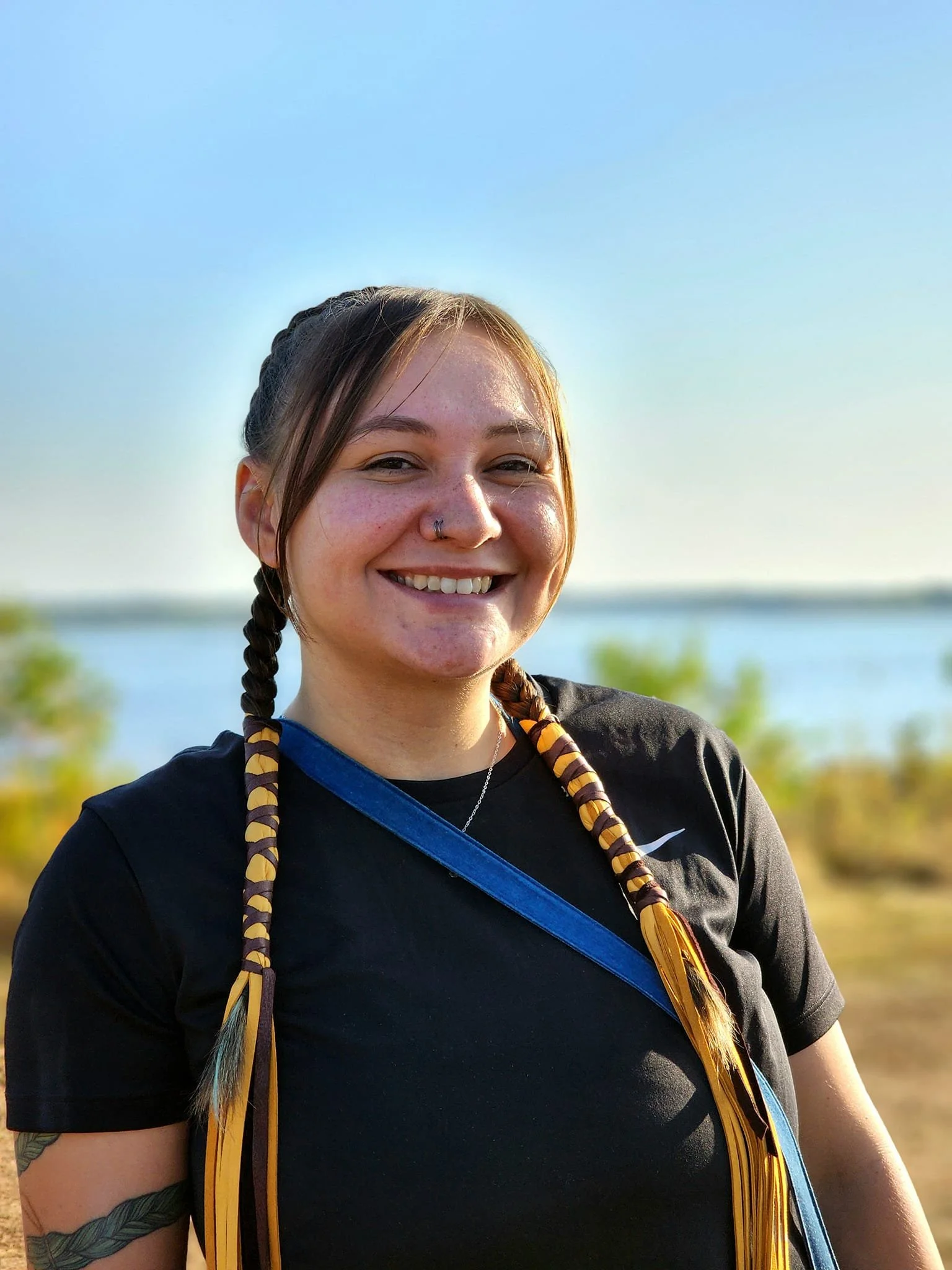





Hi, I’m Trish.
If you’re here, you’re likely standing at a threshold. Curious about therapy, but also thoughtful about what kind of work you want to do and who you want to do it with. Finding your way here already reflects an intention to engage with yourself differently and to move toward change with care rather than urgency.
I grew up in the Bronx, New York, where learning to hold complexity was not optional. It was survival. Early exposure to both struggle and resilience shaped how I listen, how I engage, and how I work therapeutically. I bring a balance of directness and warmth into the room, creating space for complexity without rushing it away. After moving to Portland in 2017, I leaned further into the practice of slowing down, allowing therapy to be intentional, attuned, and deeply human.
My interest in therapy emerged through my own experience as a client. Being in a deeply attuned therapeutic relationship shaped my understanding of how meaningful change occurs, not through fixing or pathologizing, but through sustained relational work. That understanding continues to guide how I sit with clients and the kind of therapeutic space I intentionally cultivate.
My background includes work across agency and nonprofit settings, including school based counseling, community outreach, and work with youth and families navigating significant life transitions. These experiences shaped a thoughtful, systems aware approach to therapy. I often work with clients who are creative, reflective, and navigating complexity, whether related to identity, belonging, or life paths that don’t fit neatly into expected categories.
My approach balances compassion with thoughtful direction. I hold clients with warmth and care while also helping them stay oriented toward meaningful change. Therapy is not only a place to feel understood, but a space where we work with intention and purpose.
My hope is that through thoughtful conversation and genuine connection, you can reclaim parts of your life that have been muted, fragmented, or lost and move forward with greater clarity and agency.


Identities

Identity and cultural context shape how we experience ourselves, our relationships, and the world around us. They influence how we are seen, the opportunities available to us, and the ways we adapt over time. I believe these dimensions matter in therapy, not as labels, but as lived realities that deserve thoughtful attention.
As an Indigenous Mi’kmaq mixed-race, bicultural therapist, I bring an awareness of holding multiple perspectives at once. This sensibility informs how I listen and how I approach complexity in the therapeutic process.
The name Two Eyed Healing is rooted in the Mi’kmaw teaching of Etuaptmumk, often translated as Two-Eyed Seeing. This teaching, shared by Mi’kmaw elder Albert Marshall, refers to the practice of drawing from the strengths of Indigenous ways of knowing alongside the strengths of Western psychological approaches. In my work, this means honoring relational, cultural, and embodied wisdom while also engaging with evidence-based clinical practice.

I am also informed by a liberation psychology framework, which invites attention to how personal experience is shaped within broader social and historical contexts. As a White-passing clinician, I remain committed to ongoing learning, self-reflection, and accountability. I approach this work with humility and care, continually examining my own biases while striving to create a therapeutic space that is respectful, attuned, and responsive.

Credentials & Training
Credentials & Training

EMDR Therapy
EMDR is a central modality in my work. I completed EMDRIA-approved EMDR training through the EMDR Resource Center and hold a certificate of completion. I use EMDR within a carefully placed, relational framework that prioritizes nervous system safety, readiness, and meaning-making. I participate in ongoing consultation and continuing education to support ethical, effective, and attuned EMDR practice.
EMDR Therapy
EMDR is a central modality in my work. I completed EMDRIA-approved EMDR training through the EMDR Resource Center and hold a certificate of completion. I use EMDR within a carefully placed, relational framework that prioritizes nervous system safety, readiness, and meaning-making. I participate in ongoing consultation and continuing education to support ethical, effective, and attuned EMDR practice.
The curious paradox is that when I accept myself just as I am, then I can change.
Licensure and Certification
Licensed Professional Counselor, Oregon (C11487)
Board Certified Counselor, National Board for Certified Counselors (NBCC #1651075)
Master of Science in Counseling, Portland State University
Bachelor of Art in Sociology, Pennsylvania State University
Bachelor of Art in Anthropology, Pennsylvania State University
Licensure and Certification
Licensed Professional Counselor, Oregon (C11487)
Board Certified Counselor, National Board for Certified Counselors (NBCC #1651075)
Master of Science in Counseling, Portland State University
Bachelor of Art in Sociology, Pennsylvania State University
Bachelor of Art in Anthropology, Pennsylvania State University
— Carl Rogers
The curious paradox is that when I accept myself just as I am, then I can change.

Additional Advanced Training
Perinatal Mental Health Certification (PMH-C)
Brainspotting, Phase 1 and Phase 2
Additional Advanced Training
Perinatal Mental Health Certification (PMH-C)
Brainspotting, Phase 1 and Phase 2

Interested in Working Together?

You don’t need to know exactly where to begin. If my approach feels supportive, join my Opening Notification List to hear when telehealth availability changes.
When an opening is announced, you can respond to request a free 15-minute consultation and explore whether we may be a good fit.